
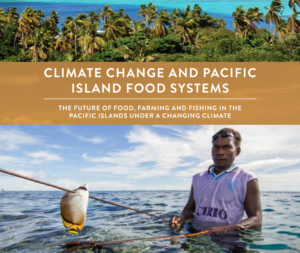
The Pacific Island region, characterized by its “large ocean states,” faces a critical crossroads as climate change threatens its traditional food systems. This comprehensive report explores the future of farming, fishing, and nutrition across 22 nations and territories, offering a roadmap for building resilience in one of the world’s most vulnerable regions.
Key Climate Challenges
- Rising Temperatures: Regional warming of at least 1.5°C is projected by 2050, with extreme heat events becoming more frequent.
- Ocean Impacts: Warming and acidification threaten coral reefs, which support vital coastal fisheries.
- Extreme Weather: More intense tropical cyclones and shifting rainfall patterns (wetter wet seasons and drier dry seasons) are expected to decimate crops and contaminate freshwater supplies.
Sea-Level Rise: Low-lying atoll nations like Kiribati and Tuvalu face severe flooding and erosion from projected rises of up to 80 cm by 2100.
Impacts on Food & Farming
- Agriculture: High-value export crops like coffee are highly susceptible to warming, while staples like sweet potato are vulnerable to waterlogging from extreme rain. However, crops like breadfruit and cassava show strong climate resilience.
- Fisheries: Tropical tuna species are projected to shift eastward, potentially reducing catches in the western Pacific by up to 17% by 2100. Conversely, freshwater aquaculture for Nile tilapia may benefit from warmer temperatures.
- Public Health: Increasing reliance on imported, energy-dense foods has already led to some of the world’s highest rates of obesity and diabetes in the region.
Future Scenarios for Policy Planning
To help navigate these uncertainties, the report outlines four “what if?” scenarios for 2030 based on different levels of regional governance and economic connectedness:
- Tug of War: Strong regional governance and high global connection lead to economic growth, yet marginalized rural populations may be left behind.
- Living on the Edge: High self-reliance and good resource management are challenged by global economic turmoil and severe environmental degradation.
- Cash Now, Pay Later: Rapid growth through extractive industries comes at the cost of long-term sustainability and public health.
- Crisis in Paradise: Poor governance and low connectivity leave the region overwhelmed by population pressure and climate impacts.
Moving Toward Resilience
The report concludes that while some changes are unavoidable, stakeholders can mitigate risks by creating more resilient food systems. Recommendations include conducting national vulnerability assessments, strengthening local food research, and diversifying diets to include climate-resilient local staples and sustainably managed tuna.