Vulnerability of Pacific Agriculture & Forestry to Climate Change
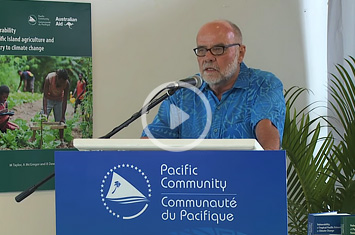
The video news story about the launch of the book entitled at CRGA, produced by Lorima Dalituicama.
The video news story about the launch of the book entitled at CRGA, produced by Lorima Dalituicama.
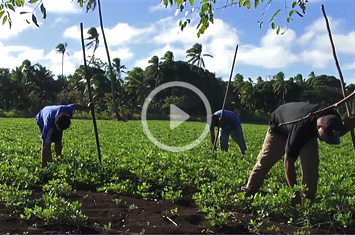
We’re excited to release a new video production capturing the lessons learned from farmer orientated value chain trainings in Fiji, Tonga and Vanuatu.
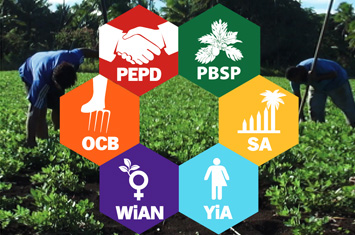
PIFON’s Strategic Plan for 2017-2020 File Size: 12000 kb DOWNLOAD PUBLICATION
VIEW & DOWNLOAD PUBLICATION
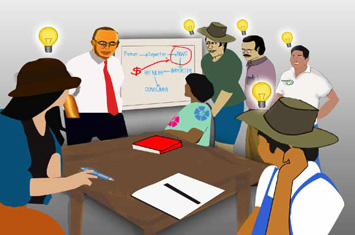
This value chain analysis guide is targeting farmers, traders and policy makers. It is designed to be practical and use-able and unlike many other value
Watch: Highlights from the Breadfruit Biocultural Conservation Knowledge Exchange Workshop, held at the Tutu Rural Training Centre, Taveuni (27–29 April 2026).
Supported by the FORI Pacific Breadfruit Project and delivered in partnership with the National Tropical Botanic Garden – Breadfruit Institute, the workshop brought together 26 participants from 9 Pacific countries to strengthen farmer-led documentation, ethical data governance, and regional collaboration on breadfruit conservation.
Key outcomes included strong regional consensus on data-sharing among partners, and a shared commitment to formalising a Pacific farmer-led breadfruit collections network.
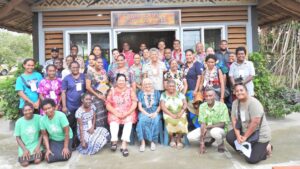
Farmer organisations play a vital role in supporting Pacific smallholder farmers to adapt to climate change by improving access to knowledge, resources, collective action, and representation—helping build resilient livelihoods and food systems across the region.
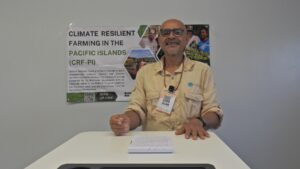
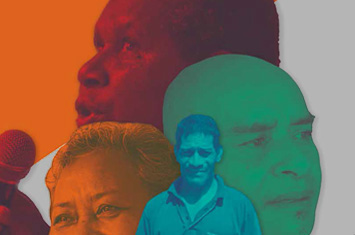
Policy Pitch by Alan Petersen at the Climate Resilience Farming in the Pacific Islands (CRFPI) Learning and Planning week at Solomon Islands
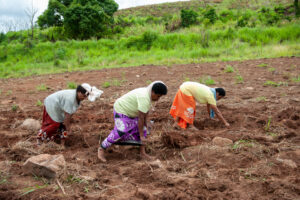
Building Climate Resilience in the Pacific Agriculture sustains over 70% of the Pacific Island population, but rising sea levels and extreme weather pose an urgent threat to these livelihoods. The Pacific Farmer Organisations (PFO) has developed a comprehensive Framework for Climate Resilient Farming to protect food security and economic stability across the region. Our strategy focuses on three core pillars: equipping farming households with adaptive technologies, amplifying farmers’ voices in policy dialogues, and strengthening the capacity of farmer organizations to lead the response. By combining traditional knowledge with modern innovation, we are empowering over 90,000 farming families to adapt, survive, and thrive in a changing climate
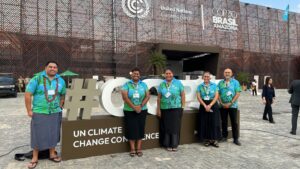
The 30th session of the Conference of the Parties to the United Nations Framework Convention on Climate Change (UNFCCC COP30) was held in Belém, Brazil from 10-21 November 2025, gathering over 56,000 participants from various organisations around the world. COP30 was widely viewed as the “Implementation COP”, reinforcing the urgent need to accelerate delivery of climate action and finance, particularly for climate-vulnerable regions such as the Pacific. With support of numerous partners, the Pacific Farmer Organisations (PFO) delegation participated in COP30 to elevate Pacific farmer priorities and strengthen advocacy for inclusive, farmer-centred climate action. The delegation included representatives from PNG Women in Agriculture (PNG), Women in Business Development Inc. (Samoa), Samoa Farmers Association (Samoa), TeiTei Taveuni (Fiji), and the PFO Secretariat.
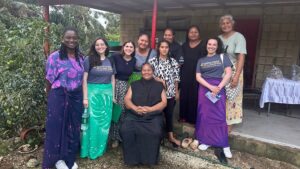
Smallholder farmers are the foundation of food production across the Pacific, yet they remain among the most vulnerable to the accelerating impacts of climate change. Rising sea levels, shifting rainfall patterns, and more frequent extreme weather events threaten agricultural livelihoods and food security.